

AI-Generated Products Won't Trigger a SaaSpocalypse
Despite new AI capabilities, alarmistic news and recent sell-off of SaaS companies, product development realities remain largely the same. Succeeding with an early-stage product remains a challenge.

Last time I made a jab at the so-called SaaSpocalypse, I focused on its financial aspects. Long story short, it’s not an apocalypse. It’s just a regression to normal. And if it all sounds significant, it’s only because the digital product companies were so overpriced in the first place.
The second challenge stands, though. As the story goes, we can all be product developers right now. With the help of modern AI tools, we can generate software that was unthinkable just quarters ago.
That was, in fact, one of the central assumptions of the viral Citrini prediction, or should I say Citrini Prophecy, that painted a grim picture of “2008 global intelligence crisis.” Although you can take only my word for it, this essay was written before Citrini published its doom and gloom scenario.
Update: While the Citrini Prophecy was dubbed as “a substack post that can crash the stock market,” the panic was short-lived.
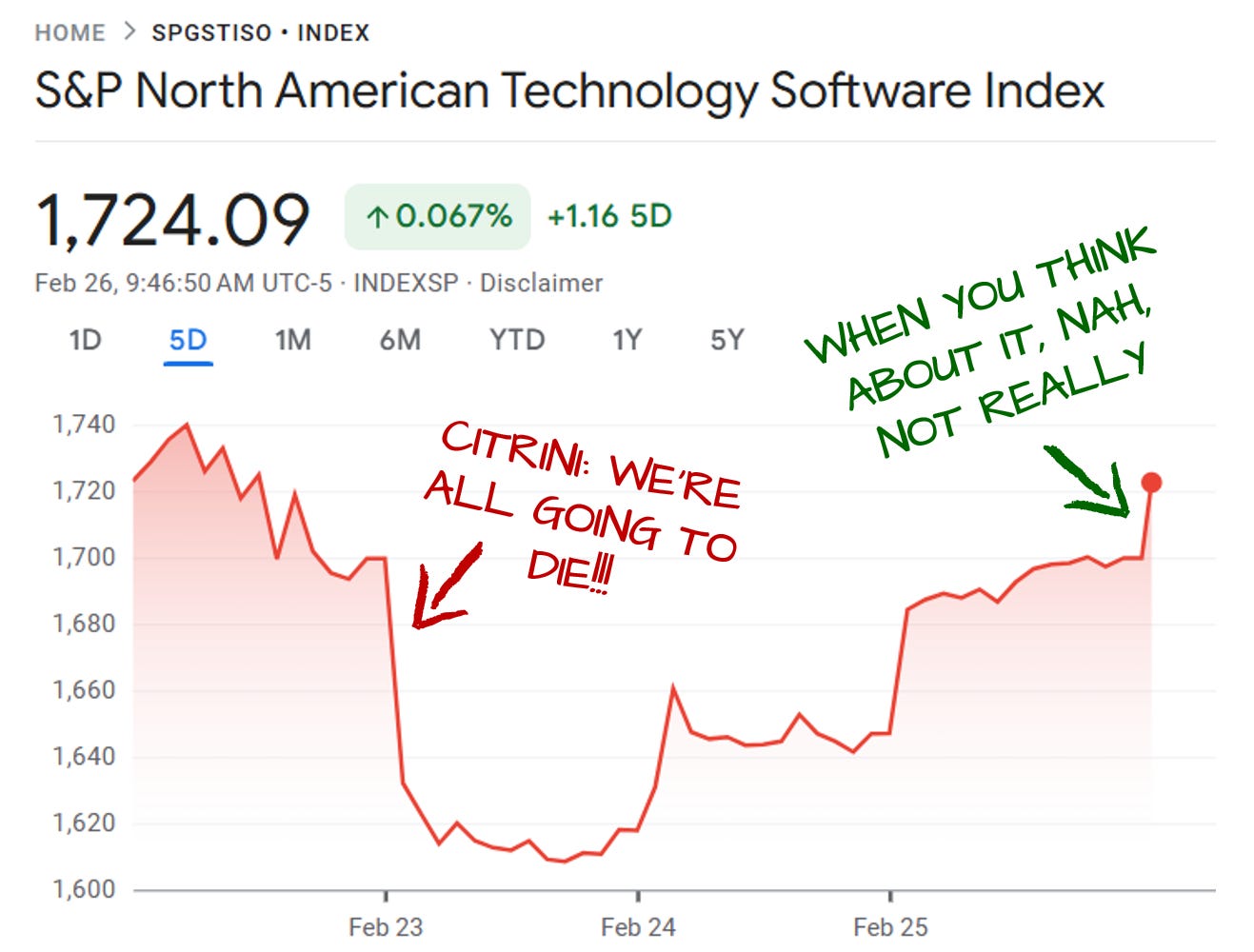
If you follow the train of thought below, the bounce back shouldn’t come as a surprise. In fact, I don’t claim to possess some secret knowledge. Anyone with a decade of experience in digital product development could probably land with similar conclusions.
So, a well-written prophecy, even if viral, is not yet a reason to panic.
Homebrewed Products Will Eat Incumbents
Here’s a story like many we hear these days. One of my friends ditched Notion, Harvest, and Zoom subscriptions, as he got AI agents to generate a productivity tool for him. A couple of others independently tried to create a prototype that would venture into Duolingo territory. Yes, that Duolingo that seems to be bleeding out despite making a record year on all accounts.
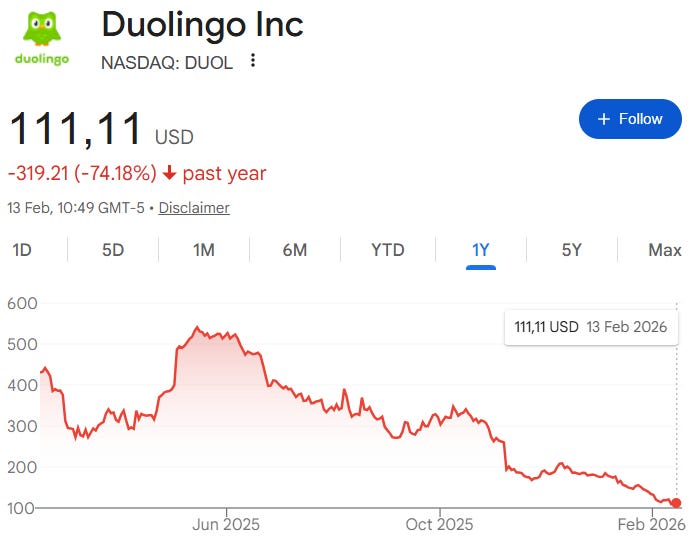
And that’s just evidence coming from my small circle. Imagine people doing that en masse, and the landscape for SaaS products must be all different. Customers drop their subscriptions as they build custom solutions for themselves, while wannabe founders create a fleet of products trying to carve out some of the revenue pie for themselves. Some eventually succeed.
The effect compounds till the existing businesses are no longer what they used to be—shrinking instead of growing.
Prototyping Is Fun
While some would dub me an AI skeptic, I am a raving fan of AI in prototyping and validation. Going toe-deep with a new idea, be it for a feature or a whole product, is easier than ever. Getting something “clickable” that enables early feedback or even just auto-reiteration of the idea is as easy as writing a prompt.
With some degree of tech-fu, we can make software operational. By that, I mean functionally working in a limited set of scenarios. A capable developer can create a productivity app or a taskboard for themselves. What’s more, it’s ideally crafted to their specific needs.
Scratch-your-own-itch solutions will see plenty of such experimenting. Was it enough to disrupt the existing SaaS model, I’d be preaching SaaSpocalypse to anyone who cared to listen.
Alas, it is not.
Maintenance Is Not Fun
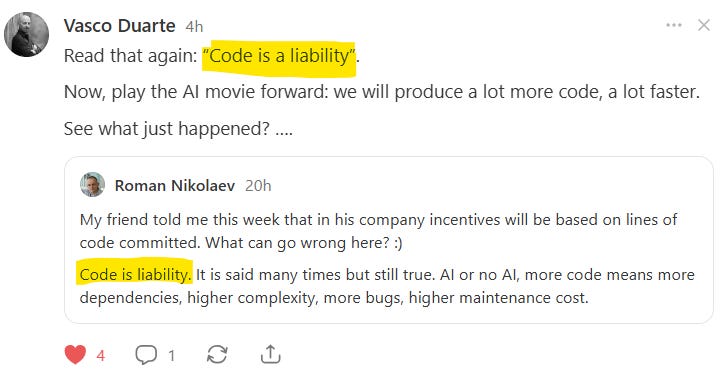
Owning things is a liability. Software is no different. The cost of creating it may be one-third of the total expenses. The rest? It goes to maintenance. Issue fixes, adjustments, changes, security patches, technology updates, infrastructure checks, and whatnot.
A side note, it’s funny how, on that account, software products seem to be similar to premium end products, from military equipment to yachts. Maybe software is a premium product? What would we know?
The point is, though, that the effort required to keep software running is significant. More significant than creating it in the first place. Not only that. It’s also not fun. Not fun at all.
Part of the work comes on its own schedule. Something is broken, and we need to fix it, or we can’t use the app. The security issue is there, and we’re vulnerable unless we apply a patch. And it doesn’t even give us a dopamine rush from accomplishing something. It’s just as it was before. The app still works. Congratulations!
The freshness of the other part—adding new features—evaporates soon, too. It used to be a pet project. Right now it’s just a tool. The UX we decided on doesn’t make much sense in retrospect, but it is what it is. We park our frustration because fixing it would require going back to the whole thing. That. Was. Supposed. To. Just. Work.
Anybody who’s been with their pet project for the long haul instantly understands the feeling.
Accumulation of Tech Debt
And then, there’s tech debt. Generating software with AI gives us a neat illusion of working code. We’d better not look under the hood. Unless we are very rigid about how we prompt, and have expert tech knowledge, and review the generated code thoroughly, we shouldn’t expect anything other than a big ball of mud as the outcome.
If that’s a starting point for the ongoing work of our AI agents, any changes we apply to the product will quickly snowball into something unmanageable. Any single fix will keep breaking other things at random. In old-school software engineering, it’s one of the least fun environments to work in. And it’s not any different with prompting.
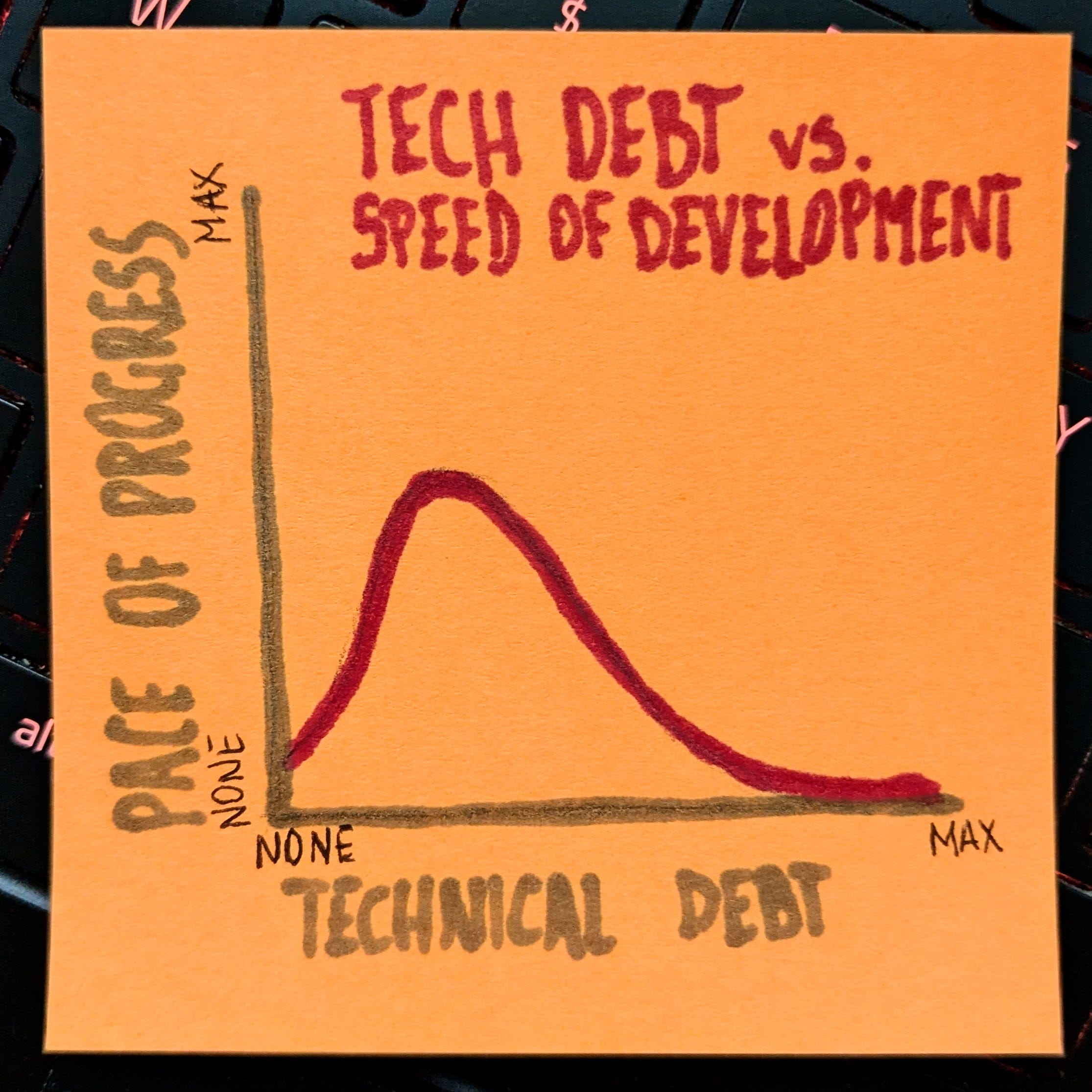
Even if the early progress makes us feel invincible, the long haul is anything but. Each consecutive code change is more challenging for an AI agent. Since it will make adjustments, whether it “knows” how to do the task or not, the situation eventually deteriorates to a point where progress grinds to a halt.
We’ve seen that over and over again when humans typed the (crappy) code. With AI, we can get there faster. Like, way faster. If anything, time-to-frustration has shrunk.
Is It Worth the Time?
Between the AI bills, the time willingly spent on early development, not-so-willingly spent on later maintenance, and dealing with the crippling tech debt, we may start asking ourselves questions. You know, questions like:
Was it worth it?
Am I really better off saving on a $20-a-month subscription?
Is my home-brew solution actually better?
Ultimately, we will predominantly arrive at the same conclusion. And it will be in line with Betteridge’s law of headlines. If we need to ask ourselves these questions, then the answer is a straight no.
A company that specializes in developing a specific tool will have advantages beyond efficient code generation (which we can now match, at least in theory). It’s a relatively safe bet that all those advantages are worth $20 a month, which a user would pay for a subscription.
In other words, pet projects will remain just that. Pet projects. They’re fun to play with when they’re fresh, but then we move on to another new shiny thing.
Just make a list of past hobbies, consider how they were “active” over time, and assess which you would still name a hobby today. If anything, pet projects wouldn’t even last as long as your average abandoned hobby.
Pet Project Is Not a Digital Product
What if a pet project turns into an actual product? Or when it’s been considered a product candidate from the outset?
Well, that’s a different discussion, indeed. Yet, this line of thinking is easier to dismiss altogether.
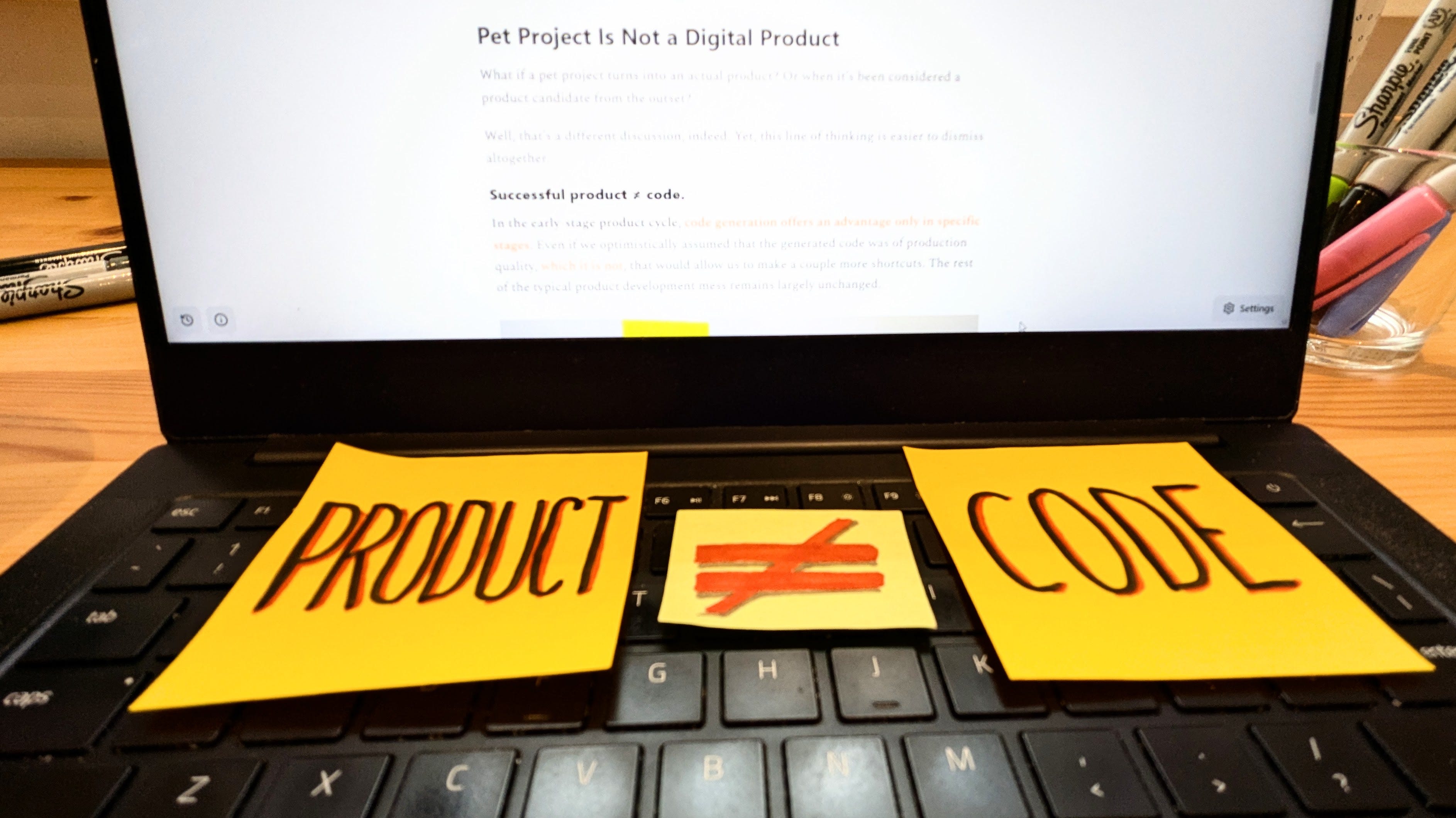
Successful product ≠ code.
In the early-stage product cycle, code generation offers an advantage only in specific stages. Even if we optimistically assumed that the generated code was of production quality, which it is not, that would allow us to make a couple more shortcuts. The rest of the typical product development mess remains largely unchanged.
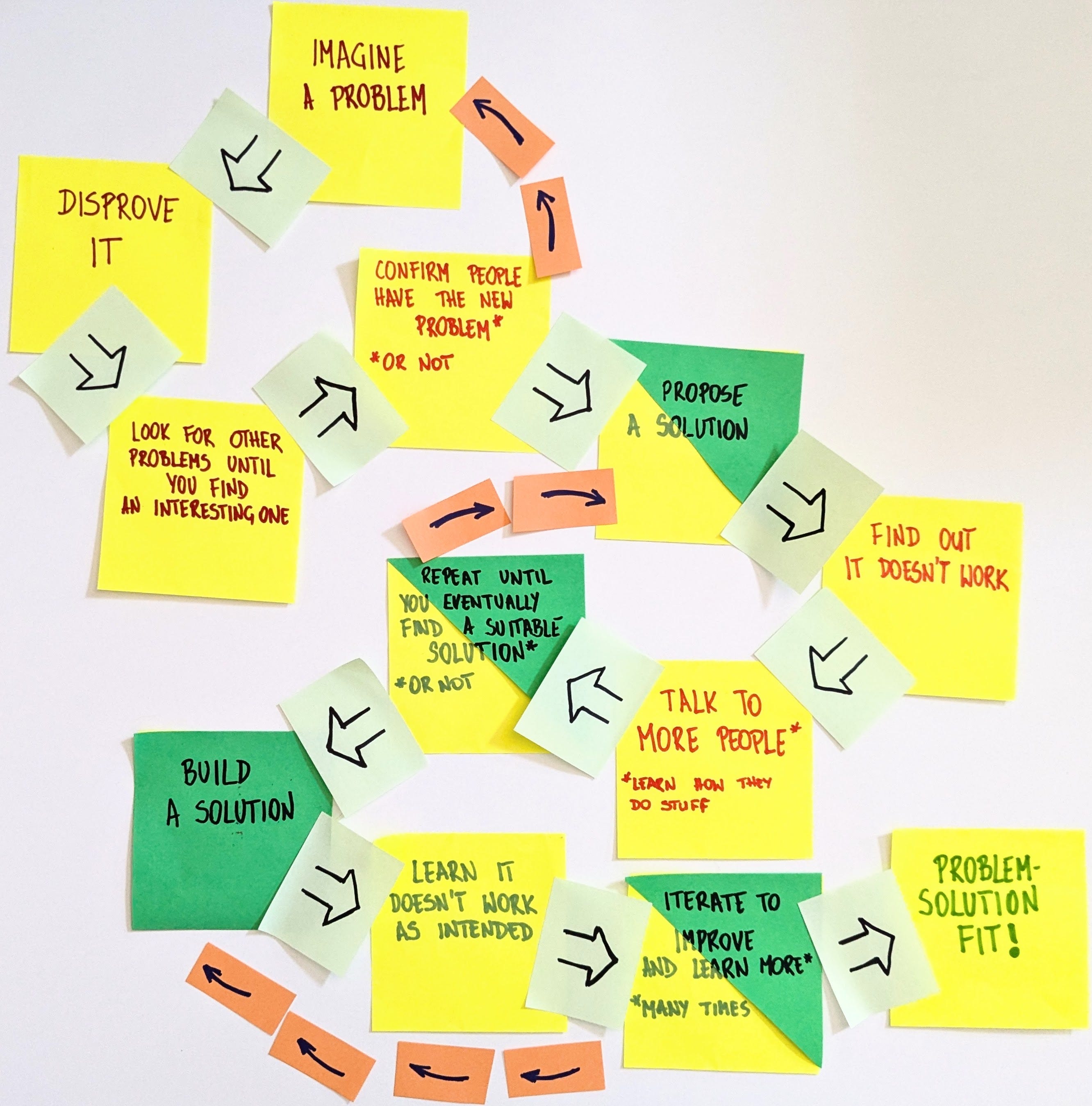
AI agents won’t make sure you run your user interviews effectively or make good judgments about the feedback you collect. If anything, it will create the “let’s skip this whole Lean Startup thing and go straight to building” highway. While definitely an option, that’s not really an approach I’d bet on.
Moats Are Still There
As much as we keep hearing that there’s no moat anymore, it ain’t true. My friends taking their chances against Duolingo face an immense moat. The incumbents have:
Validated feature-set.
Even bigger invalidated feature-set.
Existing customer base that generates revenue and profit.
Users who provide usage data.
Free cash flow that they can redirect in a myriad ways.
Known brand.
Investors’ trust.
An option to purchase an aspiring startup if it’s too promising.
Even if the product and model were entirely copyable, Doulingo shouldn’t worry that much about the next startup with the mission of disrupting or reinventing language learning. They should look at Google Translate, as, in collaboration with Gemini, the duo could easily handle the “lingo” part. And Google is nothing if not flush.
So no, I don’t expect to see a myriad of super-successful startups threatening established SaaS businesses. Product development is a more difficult challenge than building features at a good pace. It has always been.
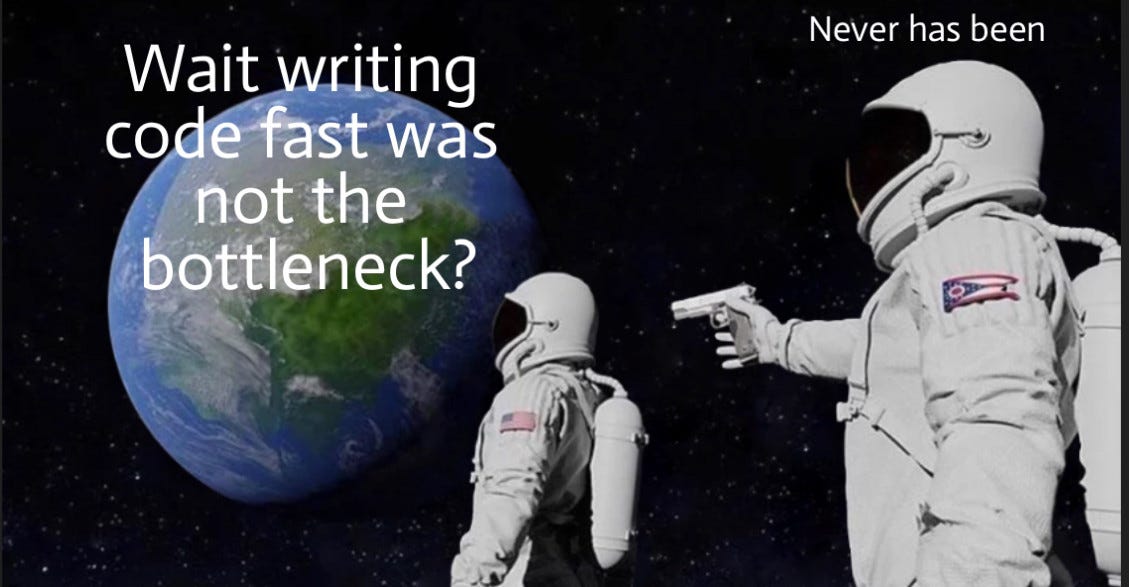
People will keep trying to build products. More of them will. The bar for trying, a.k.a. prototyping, is way lower than it used to be. The bar for making the product successful in the long run is as high as it was.
Possibly even higher, since all the other people trying to prompt their way to a successful startup will make the landscape so much noisier. Getting through with a good idea will be harder than ever.
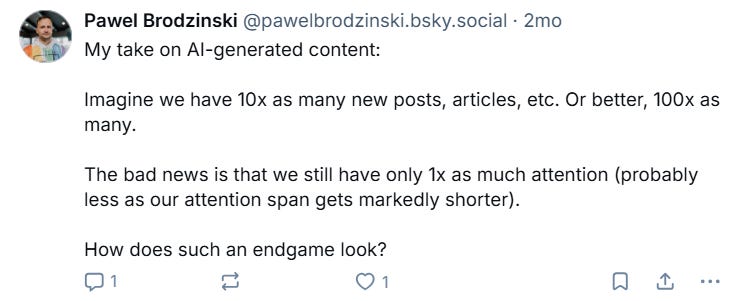
The digital product landscape will be very much like the rest of the internet. We can easily generate a lot of stuff. The only problem is that we don’t have any more hours in a day or any more attention we can invest. 10x or 100x times as many new products don’t create a reality in which 10x or 100x as many startups succeed.
If anything, that is yet another reason for SaaS to survive and thrive in the long run. Those that are already established and those that will be lucky enough to make it.
In the first part of this mini-series, I touched upon the financial arguments against alarmist tones.

This post has been human-created. Yup, it’s a genuine bio food for LLM training.
웃https://okhuman.com/tBvzhw